Price level 92.8
Ohio: the contract law does more work than a license
We found no state license for general remodelers, but a state chapter sets written-contract and deposit rules for larger home jobs.
By RenovaOak Editorial Team Updated 6 min read
- Price level
- 92.8 (U.S. = 100)
- Contractor license
- No state general license
- Contract rules
- Written at $25,000+
In short
Ohio has no state license for general remodelers that we could find. What it does have is Chapter 4722 of the Revised Code: for work of $25,000 or more on a one-, two- or three-family home, a written contract is required, and a down payment is capped at 10% of the price. The Residential Code of Ohio rests on the 2018 International Residential Code, and it is enforced only where a local department is certified for residential buildings. EPA runs the lead-safe rule.
Ohio at a glance
What the 92.8 price level does and does not say
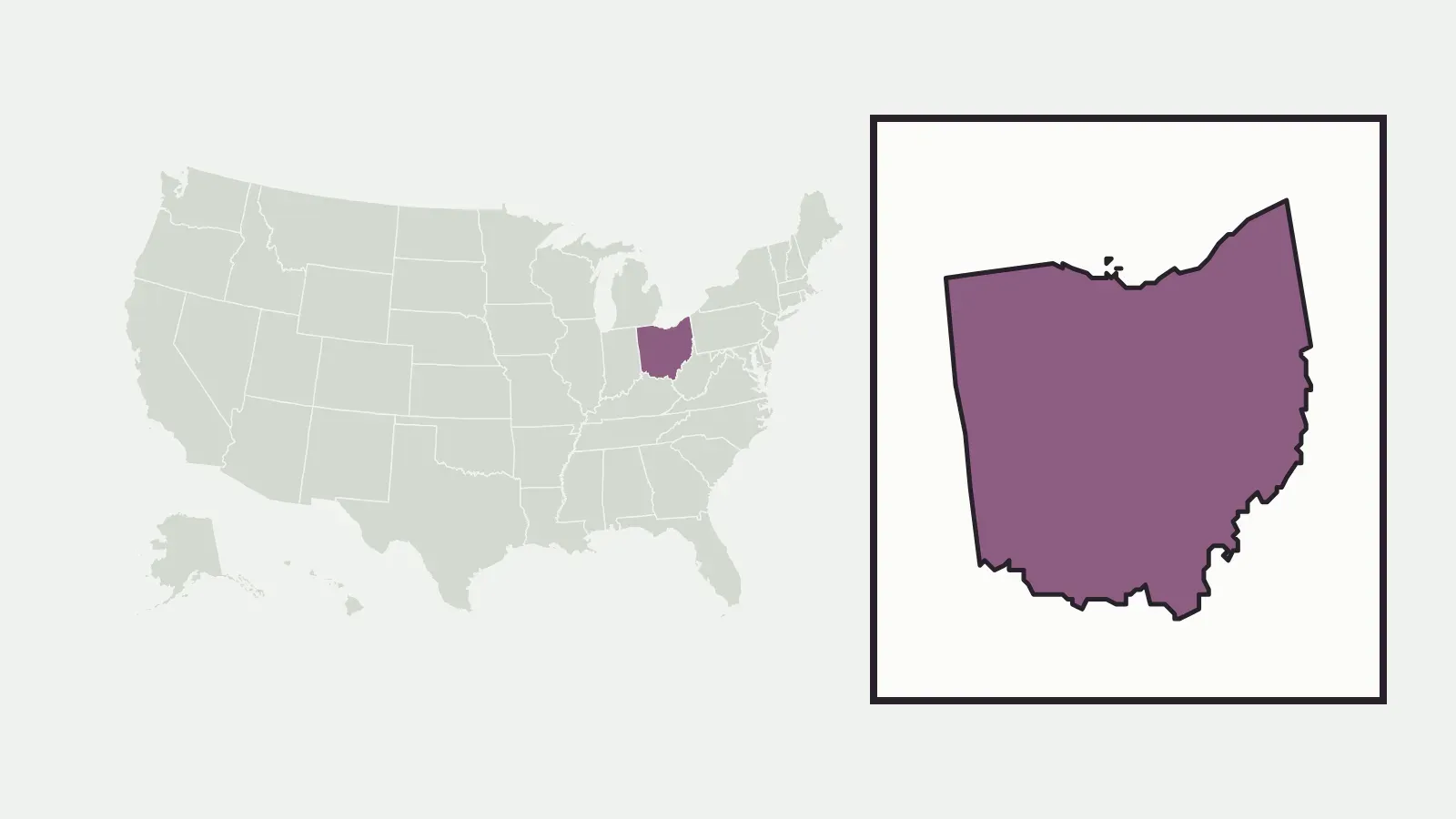
BEA puts Ohio at 92.8 for 2024, with the national figure at 100, so Ohio falls in the lower group on the map. It measures a household's overall cost of living, rent among it. It is not a measure of what a remodel costs.
Your own bids are the number that counts. Put them in the quote check tool to see them per square foot. The Bureau of Labor Statistics lists Ohio wages for carpenters, electricians and plumbers, area by area, at data.bls.gov/oes.
Who may do the work
Ohio's Construction Industry Licensing Board licenses five contractor types: heating and cooling, refrigeration, electrical, plumbing and hydronics (ORC 4740). The chapter's definition of a covered construction project leaves out residential buildings, and it does not list general contractors as a licensed type. Put simply, we found no state license that a kitchen or basement remodeler must hold for a house.
That leaves the checking to you and your city. Cities and counties may set their own rules, and we did not survey them. Ask your building department what it requires, then ask the contractor for proof of insurance. The contract law below also requires a certificate of insurance on larger jobs.
For the questions that fit any state, read the contractor-hiring guide.
The home construction contract law
Chapter 4722 covers suppliers who do home construction work on one-, two- or three-family dwellings. It leaves out buildings with four or more units (except work inside a single unit), condominium common areas, and manufactured homes. Cost-plus contracts are exempt from most of its rules.
- Work of $25,000 or more needs a written contract before it starts, signed and dated by both sides.
- The contract names the supplier, the owner and the job site, describes the work and materials, gives start and finish dates, and shows the total estimated cost.
- A certificate of insurance showing at least $250,000 in general liability coverage goes with it.
- If unforeseen but necessary extra costs pass $5,000 over the life of the contract, the supplier must give you an estimate before doing that work.
- A down payment may not exceed 10% of the price, except up to 75% of the cost of a special-order item that cannot be returned or used elsewhere.
There is no separate cooling-off period in this chapter. You can seek rescission for a violation of the contract, excess-cost or down-payment rules, as long as you act within a reasonable time and before the work's condition changes substantially. A separate protection is the federal cooling-off rule for sales closed at your home (FTC 16 CFR part 429). The chapter's written-contract rule starts at $25,000, so for smaller jobs the change orders page shows what to write yourself.
Permits and the Residential Code of Ohio
The Residential Code of Ohio (RCO) is built on the 2018 International Residential Code, with Ohio's own amendments. A newer amendment list was published for review in July 2026, and we found no new base edition.
What makes Ohio different is who enforces it. Certified residential building departments, run by a city, township or county, apply the RCO. Where no department is certified for residential buildings, the code says an owner does not have to submit construction documents or get approvals, and a department certified only for new homes generally does not review alterations or repairs. Plumbing rules are enforced by local health districts. A department's certification can change, so call yours. The permits guide lists what usually needs one.
Lead-safe work in older homes
Ohio leaves lead-safe renovation to EPA. For a pre-1978 house, a hired contractor falls under the federal rule whenever interior work touches more than 6 square feet of paint in a room, or when windows are replaced or painted surfaces demolished (40 CFR 745.83). Before any wall comes down, confirm the firm's EPA certification and read the lead and asbestos guide.
Where to check and complain
File a consumer complaint with the Ohio Attorney General through its online portal. The Licensing Board's pages we read did not explain how to verify a license or lodge a complaint, so for a trade license, start at the Department of Commerce.
Common questions
Does Ohio license general contractors?
We found no state license for general remodelers working on houses. The state board licenses five trades, and its project definition excludes residential buildings. Ask your city or county.
When must an Ohio home contract be in writing?
For work of $25,000 or more on a one-, two- or three-family home, unless the contract is cost-plus. Chapter 4722 lists what it must contain.
How big a deposit can a contractor ask for?
Up to 10% of the contract price before work starts, with up to 75% allowed for a special-order item that cannot be returned. Cost-plus contracts are not covered.
Does every Ohio town enforce the residential code?
No. A building department has to be certified for residential buildings, and some are certified only for new construction. Call yours before you assume a permit is needed or not.
Sources
- Ohio Revised Code, Chapter 4722: Home construction service suppliers
- Ohio Revised Code, Chapter 4740: Construction industry licensing board
- Legislative Service Commission: Construction Industry Licensing Board
- Ohio Board of Building Standards: RCO rules and summary (July 2026)
- ICC NTA: Ohio code adoptions
- Ohio Attorney General: File a complaint
- EPA: Lead Renovation, Repair and Painting Program
- 40 CFR 745.83: Definitions, minor repair and maintenance
- FRED: Regional price parity, all items, Ohio (BEA)
Checked November 19, 2026. We read the pages above. The Board of Building Standards pages did not open directly, so the RCO edition comes from the Board's July 2026 summary document and a code-adoption listing that may lag. We did not open local licensing rules, the Home Solicitation Sales Act or the Department of Commerce complaint steps. A second check on November 20, 2026 read the main official pages again; it did not re-confirm that Ohio has no state general license; the code edition comes from an ICC listing.
Keep reading
-

Planning guide
Change orders and payment schedules
Put every change in writing, understand allowances and contingency, and pay in a way that protects you.
-

Planning guide
Choosing a contractor
Scam signs, license and insurance checks, comparable written bids, contract basics and what to do in a dispute.
-

Planning guide
Permits for interior remodels
What usually needs a permit, what does not, a call script for your building department, and the inspection order.