Price level 94.3
North Carolina: a $40,000 license line and a state-run lead program
Big jobs need a licensed general contractor, smaller ones rely on your own checks, and the state, not EPA, certifies lead-safe firms.
By RenovaOak Editorial Team Updated 6 min read
- Price level
- 94.3 (U.S. = 100)
- Contractor license
- General: $40,000 or more
- Contract rules
- 3-day cancel at home sales
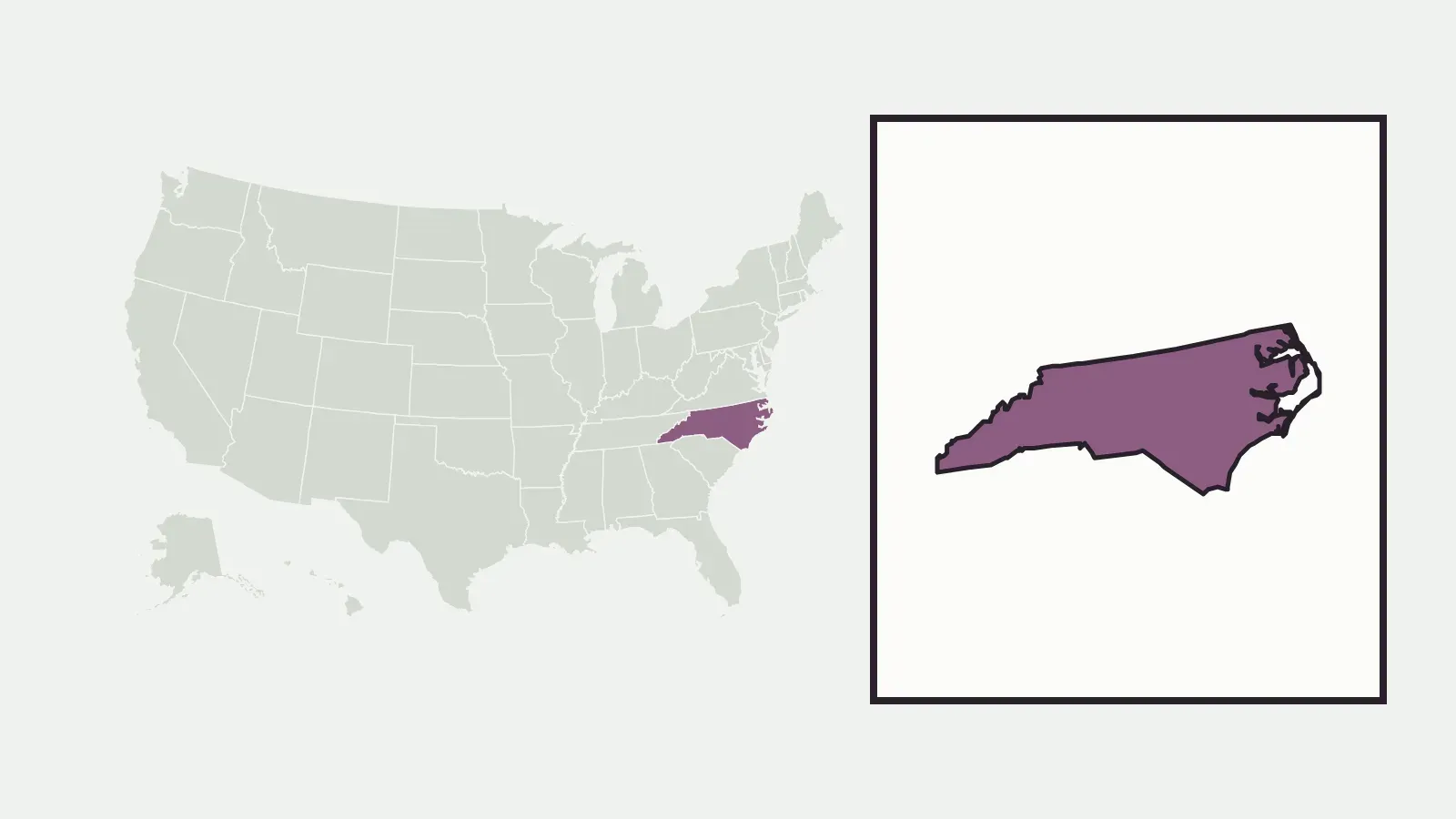
In short
A North Carolina general contractor license is required once a project's cost reaches $40,000, under G.S. 87-1. Below that line the general license does not apply, so your own checks matter more. Sales made at your home carry a three-day right to cancel. The residential code in force is still the 2018 North Carolina Residential Code, because the 2024 edition has been delayed. The state's health department, not EPA, certifies firms for lead-safe work in older homes.
North Carolina at a glance
What 94.3 says about remodeling, which is little
North Carolina scores 94.3 on BEA's 2024 regional price parity, with 100 as the U.S. level, so it sits in the lower group. BEA builds that number from a household basket in which rent has a large share. It is not a remodeling price index.
The real price signal is a stack of written bids on your own scope. The quote check tool puts them side by side. Local labor rates for carpenters, electricians and plumbers are published for each North Carolina area at data.bls.gov/oes, which is worth a look before you judge a bid as high or low.
Who may do the work
The Licensing Board for General Contractors treats anyone who bids on or builds an improvement as a general contractor when the cost is $40,000 or more (G.S. 87-1). Licenses come in classes: limited, for a single project up to $750,000, then intermediate up to $1.5 million, then unlimited. A separate residential contractor license covers only homes built to the North Carolina Residential Code.
The line applies to the cost of the whole undertaking, so ask a bidder how the price is built if your job lands near it. Plumbing, electrical and HVAC trades have separate licensing in the state, which we did not research here.
A homeowner may alter a building on land they own for their own occupancy without a license, but only after signing an affidavit that they will personally manage all of the work and attend the inspections. If the owner does not live there for 12 months afterward, the law presumes the exemption did not apply (G.S. 87-1 and 87-14). The Board checks the claim and the permit can be revoked.
To check a license, use the search tool at nclbgc.org. The contractor-hiring guide lists what else to ask for.
Contracts, cancellation and payment
The rule we could confirm is about how you buy. North Carolina gives consumers three days to cancel a sale made away from the seller's place of business, such as one closed in your living room. The right does not reach sales under $25, sales by phone or mail, or sales negotiated at the seller's regular place of business. The seller is expected to explain the right in the contract, and you send written notice before the period ends.
We did not find a statewide dollar line that requires a written home-improvement contract or a cap on deposits. Not finding one is not proof, so treat it as unconfirmed. Write your own protections into the agreement.
- A scope listed room by room, with finish allowances named.
- A payment schedule tied to completed work, not to dates.
- A rule for change orders: written, priced and signed before the work.
- A final payment held until the punch list is done.
The change orders page has the longer version. A licensed general contractor's customer may also reach the Homeowners Recovery Fund, which helps eligible homeowners who lost money to a licensed contractor's dishonest or incompetent conduct.
Permits and the 2018 code
The 2018 North Carolina Residential Code has applied since January 1, 2019. The State Building Code Council adopted a 2024 edition, but a 2025 law postponed it until twelve months after the State Fire Marshal certifies that the code is published and the Residential Code Council is fully formed. The Fire Marshal's March 2026 newsletter says enforcement continues under the 2018 code. As of November 2026 we found no new date, so confirm with your inspector.
Your local building department decides what needs a permit. Moving a wall, adding circuits or changing plumbing usually does, and the permits guide explains why.
| Edition | Status |
|---|---|
| 2018 NC Residential Code | In force; effective January 1, 2019 |
| 2024 NC State Building Code | Adopted but delayed by S.L. 2025-2; no effective date found |
Lead-safe work in older homes
North Carolina is one of the states EPA has authorized to run its own program. The NC Department of Health and Human Services, Division of Public Health, through its Health Hazards Control Unit, certifies firms and renovators for paid work in pre-1978 housing. Training comes first, then certification. Ask your contractor for the state certification, and read the lead and asbestos guide.
Where to check and complain
Licensed general contractors answer to the Licensing Board for General Contractors. For sales-practice problems, the Attorney General's consumer protection division at ncdoj.gov takes complaints.
Common questions
At what job size does North Carolina require a general contractor license?
At a cost of $40,000 or more for the undertaking, under G.S. 87-1. A lower-priced remodel does not need the general license, though trade work can have its own licensing.
Can I cancel a contract I signed at my kitchen table?
Often yes. North Carolina allows three days to cancel off-premises sales, except those under $25 and a few other types. Check the cancellation notice in your contract and send written notice in time.
Which residential code applies?
The 2018 North Carolina Residential Code. The 2024 edition was delayed by a 2025 law, so ask your inspector which edition applies to your permit.
Who certifies lead-safe contractors in North Carolina?
The NC Division of Public Health's Health Hazards Control Unit runs the program for paid work in homes built before 1978.
Sources
- NC General Statutes, Chapter 87 (general contractors)
- NC Licensing Board for General Contractors
- NC Department of Justice: Right to cancel
- NC Office of State Fire Marshal: Codes, current and past
- NC Office of State Fire Marshal: 2024 State Building Code delay
- NC Office of State Fire Marshal: Engineering newsletter, March 2026
- NCDHHS: Lead-based paint renovation, repair and painting
- EPA: Lead Renovation, Repair and Painting Program
- FRED: Regional price parity, all items, North Carolina (BEA)
Checked November 19, 2026. We read the pages above, but the first 100,000 characters of Chapter 87 only. The State Fire Marshal's codes page and March 2026 newsletter still showed the 2018 code in force. We did not confirm a written-contract threshold, a deposit rule or the Board's complaint steps. A second check on November 20, 2026 read the main official pages again; it did not find a 2024 effective date for a newer residential code.
Keep reading
-
Planning guide
Choosing a contractor
Scam signs, license and insurance checks, comparable written bids, contract basics and what to do in a dispute.
-
Planning guide
Change orders and payment schedules
Put every change in writing, understand allowances and contingency, and pay in a way that protects you.
-
Planning guide
Lead paint and asbestos in older homes
EPA's lead-safe rule, EPA's asbestos advice, and the testing and contract lines to settle before you open a wall.