Price level 98.6
Minnesota: when a remodeler needs a state license
The line is drawn by trade skills, not dollars: one skill needs no state license, but a kitchen that mixes cabinets and drywall probably does.
By RenovaOak Editorial Team Updated 7 min read
- Price level
- 98.6 (U.S. = 100)
- Contractor license
- Two or more skills
- Contract rules
- Written, signed contract
In short
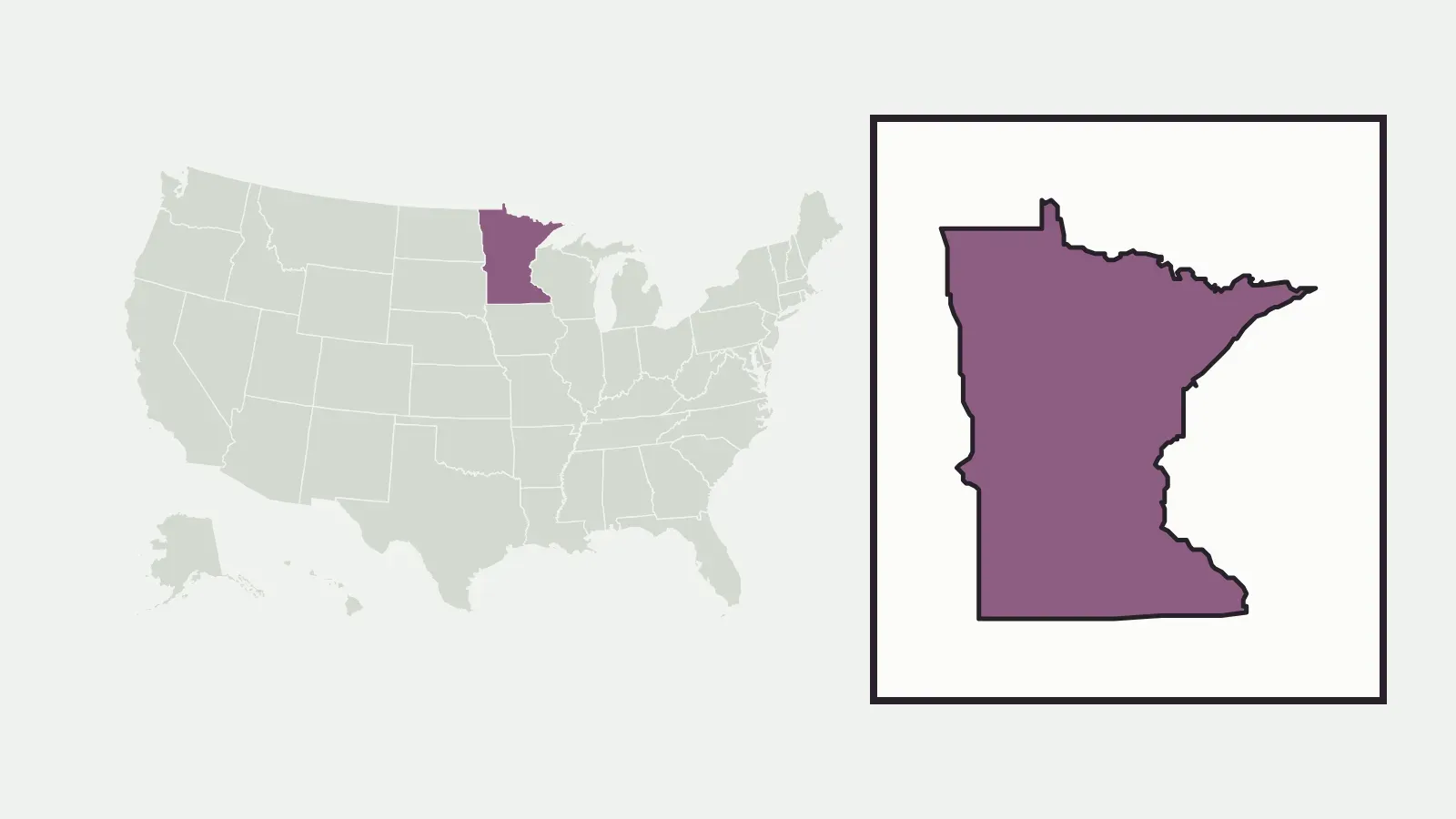
Minnesota's price level is 98.6 (U.S. = 100), a household index and not a remodel price. The Department of Labor and Industry (DLI) licenses a residential remodeler when the work uses two or more of eight defined special skills; a contractor offering only one skill generally needs no state license. Licensed work needs a written, signed contract with a description, materials and price, and a signed copy at signing. The statewide residential code is the 2020 Minnesota Residential Code, built on the 2018 IRC, and a 2024 update is still under review.
Minnesota at a glance
Putting 98.6 in perspective
BEA's regional price parity compares the cost of a household's whole basket, rent included, in each state. Minnesota's 2024 value is 98.6 against 100 for the nation, which puts it just inside our "higher" tier by the thresholds we use.
That is the wrong yardstick for a contractor's quote. Winter scheduling, your suburb and the size of the crew matter more. Three written local bids, entered into the bid comparison tool, will tell you more. Wage tables for carpenters, electricians and plumbers in your area sit at data.bls.gov/oes.
Who may do the work: licenses by skill
Minnesota Statutes 326B.802 defines eight special skills: excavation, masonry and concrete, carpentry, interior finishing, exterior finishing, drywall and plaster, residential roofing, and general installation specialties. A residential remodeler is a business that contracts to improve existing residential real estate using two or more of them. Section 326B.805 says remodelers must hold a remodeler or building contractor license.
Interior finishing includes flooring, cabinets and countertops, insulation, painting, tile and wallpapering. Carpentry includes framing, finish carpentry, doors and hanging drywall; drywall and plaster covers taping and finishing. By our reading of that list, a kitchen job that installs cabinets and drywall touches at least two skills, so the contractor who contracts with you should hold a license.
| Situation | What the state says |
|---|---|
| Job uses two or more special skills | Residential remodeler or building contractor license |
| Contractor offers only one special skill | Generally no state license (roofing is an exception) |
| Gross annual receipts under $15,000 | May qualify for a certificate of exemption, renewed yearly |
| You improve a home you occupy | Owners are exempt, unless building or improving for resale or speculation |
Electricians, plumbers and others under statewide licensing are exempt from this license for their own licensed work. Look a contractor up with DLI's "Check a License" tool, and read choosing a remodeling contractor before you invite bids.
Contracts and payments
Minnesota Statutes 326B.809 requires proposals, estimates, bids, contracts, purchase orders and change orders between a licensee and a customer for licensed services to be in writing. A contract must have a detailed description of the work, the materials or a list of standard features, and the total price or the method for calculating it.
- The licensee must give you written performance guidelines before the agreement, included in it or incorporated by reference.
- Both sides sign and date every agreement.
- At signing you receive a signed, dated copy of each document, at no charge, including lien waivers.
The statutes we opened set no deposit cap and no home-solicitation cancel right for remodeling; the one cancel rule we read, in section 326B.811, covers roofing paid from an insurance claim and is outside this site's scope. Ask a lawyer or the Attorney General if you were pressured at your door. Handle extras through written change orders; see change orders.
Permits and the residential code
The code listed by DLI is the 2020 Minnesota Residential Code. A November 2025 review document says Chapter 1309 adopts the 2018 IRC with amendments and chapter 1322 adopts the residential provisions of the 2012 IECC, and that a technical advisory group recommends moving to the 2024 IRC. The recommendations still go to the Construction Codes Advisory Council and the Commissioner, with no effective date given, so as of November 2026 we can confirm only the 2020 edition. We did not confirm who issues permits in your city; call the building department before work. Permits for interior remodels explains the reasoning.
Lead-safe work in older homes
Lead renovation falls under EPA in Minnesota. Any paid job on a pre-1978 home that touches more than six square feet of paint in a room, or replaces a window, calls for an EPA-certified firm. State law adds that licensed remodelers working on pre-1978 homes must follow Minnesota Statutes 326B.106, subdivision 14. See lead paint and asbestos in older homes.
Where to check and complain
DLI handles license questions and complaints about contractors; its licensing line is 651-284-5034. It also lists enforcement actions against contractors. The Attorney General's consumer handbook on home building is a plain-language guide to hiring and warranties, including the statutory warranties that cover major structural changes and additions.
Common questions
Does a Minnesota remodeler need a state license?
If the contractor offers more than one of the eight special skills in the job, yes: a residential remodeler or building contractor license. A single-skill specialty contractor generally does not.
Can I work on my own home without a license?
Section 326B.805 exempts owners who build or improve property they occupy or will rent, but not when the work is for resale or speculation.
Does a Minnesota remodeling contract have to be written?
For licensed services, yes: section 326B.809 requires written bids, contracts and change orders, with the work, materials and price described.
Which residential code does Minnesota use?
The 2020 Minnesota Residential Code, built on the 2018 IRC. A 2024 update is under review with no effective date as of November 2026.
Sources
- Minn. Stat. 326B.805, licensing requirements
- Minn. Stat. 326B.802, definitions
- Minn. Stat. 326B.809, contracts
- DLI: Residential contractor licensing
- DLI: Residential contractors, remodelers, roofers
- DLI: 2020 Minnesota State Building Codes
- DLI: 2024 international model codes review, November 2025 (PDF)
- Minnesota Attorney General: Home building handbook, chapter 4
- FRED: Regional price parity, Minnesota (MNRPPALL), from BEA release 26-10
- EPA: Renovation, Repair and Painting Program
Checked November 19, 2026. We read the pages above. Section 326B.838 and 326B.836 would not load, so we did not confirm any statutory deposit cap or consumer-notice rule beyond 326B.809. The kitchen example is our reading of the skill definitions, not a DLI ruling; ask DLI if your job is borderline. We did not confirm who issues permits. The DLI code page did not state the IRC edition itself; that comes from the November 2025 review document. Confirm with the agency before you act. A second check on November 20, 2026 read the main official pages again; it did not re-confirm the 2018 IRC base of the 2020 code.
Keep reading
-

Planning guide
Choosing a contractor
Scam signs, license and insurance checks, comparable written bids, contract basics and what to do in a dispute.
-

Planning guide
Change orders and payment schedules
Put every change in writing, understand allowances and contingency, and pay in a way that protects you.
-
Planning guide
Lead paint and asbestos in older homes
EPA's lead-safe rule, EPA's asbestos advice, and the testing and contract lines to settle before you open a wall.