Price level 103.4
Florida: licenses, contracts and codes for an interior remodel
The state licenses remodelers, sets deadlines when you pay a large deposit, and is about to switch building code editions.
By RenovaOak Editorial Team Updated 6 min read
- Price level
- 103.4 (U.S. = 100)
- Contractor license
- State license, $2,500+
- Contract rules
- Lien notice above $2,500
In short
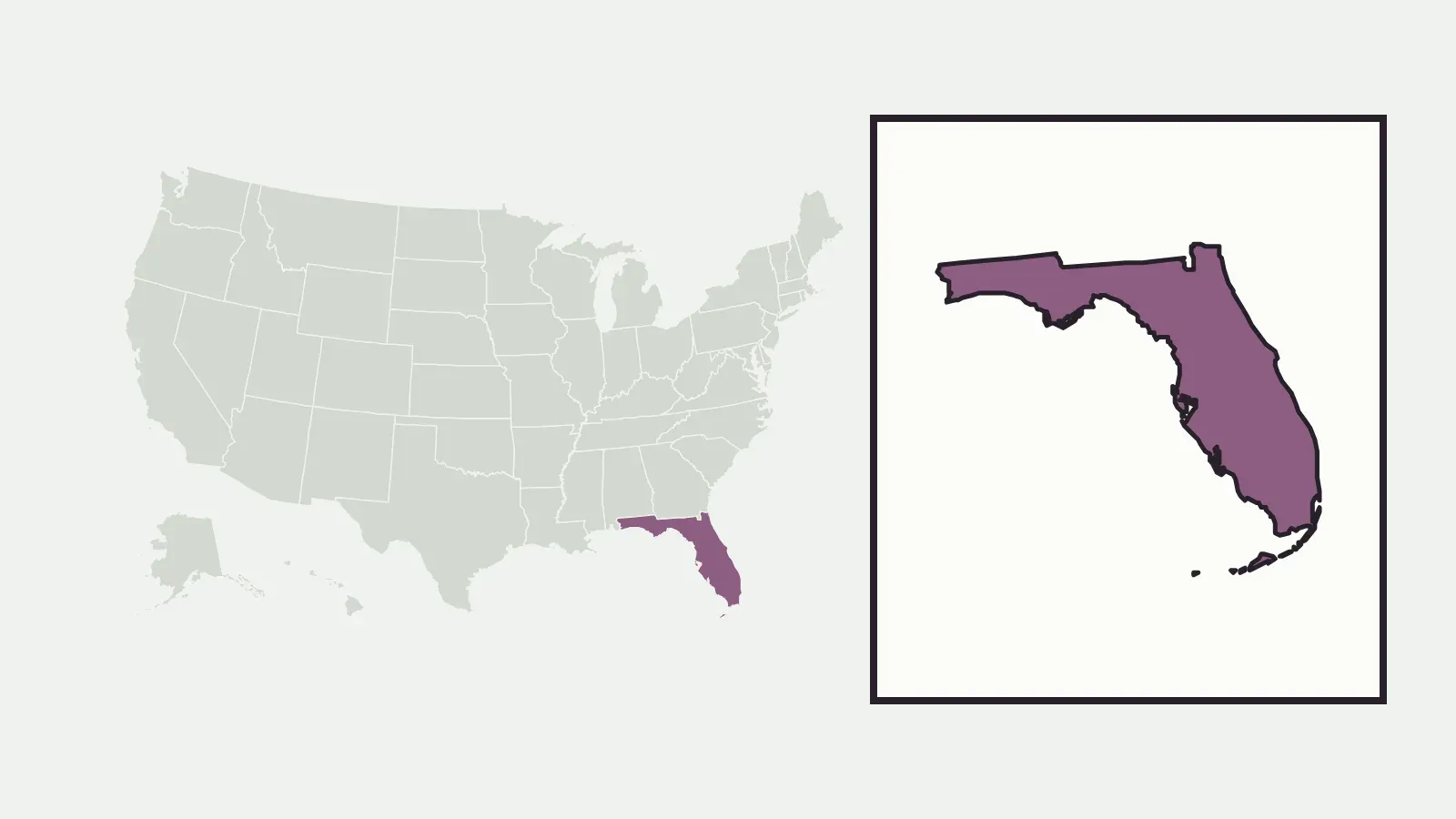
Florida's price level is 103.4, in the higher band, but that figure counts household spending, not remodeling. Contracting work that is not minor needs a state-certified or locally registered contractor, and jobs under $2,500 that are casual and minor are exempt. A first payment above 10% of the price starts legal deadlines for the contractor. The 8th Edition (2023) building code applies now, and the 9th Edition (2026) is scheduled for December 31, 2026.
Florida at a glance
What the 103.4 price level tells you
The Bureau of Economic Analysis publishes regional price parity: what a typical household pays in each state for everyday goods and services, with the U.S. average set at 100. Florida's 2024 figure is 103.4. On this site's map, that is the "higher" band, which runs from 98 to 104.9.
Read it narrowly. The index counts rents and groceries and everything else a household buys. It does not price a bathroom gut or a floor refinish, and a framing carpenter's hourly wage is not in it. So do not multiply a national cost figure by 1.034. Collect three written bids for the same scope, line them up in the quote check, and look up the wages for carpenters, electricians and plumbers in your metro area at data.bls.gov/oes. BEA's next release is due December 10, 2026.
Who may do interior remodeling work
Chapter 489 of the Florida Statutes defines contracting as taking on, bidding or performing the building, repair, alteration or remodeling of a structure for someone else. The Department of Business and Professional Regulation (DBPR) and its Construction Industry Licensing Board handle the licenses. Two kinds matter to you.
- Certified contractors hold a state certificate and may work in any county or city.
- Registered contractors met one jurisdiction's competency requirements and may work only in that jurisdiction.
- A residential contractor license covers one-, two- and three-family homes. A building contractor may remodel a building of any size if the work does not touch structural members.
Two exemptions are worth knowing. Work that is casual, minor and inconsequential, with a total price under $2,500, needs no license, unless it is a piece of a larger job, is split up to dodge the limit, or comes from someone who advertises as a contractor. And you may act as your own contractor on your one- or two-family home if you supervise the work on site yourself, sign the permit application, and do not sell or lease within a year of finishing.
An unlicensed contractor pays a price in court. Under section 489.128, that contractor cannot enforce the contract and has no lien or bond claim for the work. To check a license, use the DBPR license search by name or number, then match the name on your contract to the name on the record. The contractor page covers the other questions to ask.
Contract and payment rules
The rules that touch your paperwork sit in three places, and each one is triggered by a dollar figure.
| Rule | What it says | Where |
|---|---|---|
| Recovery fund statement | A contract for residential repair or improvement must carry a written explanation of the Florida Homeowners' Construction Recovery Fund, unless labor and materials total $2,500 or less. | Section 489.1425 |
| Lien notice | A direct contract above $2,500 for a dwelling of up to four units needs a boldface, all-capitals notice that unpaid subcontractors and suppliers can lien the property, even if you paid in full. You sign and date it. | Section 713.015 |
| Large first payment | If the first payment is more than 10% of the price, the contractor must apply for permits within 30 days (when one is needed) and start work within 90 days after the permits issue, unless there is just cause. | Section 489.126 |
The 10% rule is not a cap on deposits. It is a clock. If the contractor misses it, you send a written demand by certified mail, and silence for 30 days can support an inference that there was no just cause. Violations are crimes, graded by the amount taken. For how to tie payments to finished work, see change orders.
On cancelling: the federal Cooling-Off Rule (16 CFR part 429) gives three business days for a sale of $25 or more made at your home. Florida's home solicitation statute, section 501.031, uses a similar notice. Not confirmed: whether a given remodel contract meets that statute's definition, since its definitions section was not read.
Permits and the building code
The Florida Building Code, 8th Edition (2023), is the edition in force as of November 2026. The 9th Edition (2026) is scheduled to take effect on December 31, 2026. A permit application first submitted on or after that date has to meet the new edition, while earlier applications generally stay under the old one, though local procedures differ. The Florida Building Commission's October 2026 work plan still listed final approval steps as to be determined, so confirm before you plan around the date.
Permits come from your city or county building department, and it decides which interior jobs need one. The permits page explains the usual triggers. If you act as owner-builder, you appear in person and sign the permit application yourself.
Lead-safe work in older homes
EPA, not the state, sets the lead-safe renovation rules here, because Florida is not on the agency's list of authorized states. The federal Renovation, Repair and Painting rule covers paid work that disturbs painted surfaces in homes built before 1978. Small jobs below 6 square feet of paint per room are classed as minor, but window replacement and demolition of painted surfaces are not minor at any size. Read the lead and asbestos page before you open a wall in an older house.
Where to check and complain
- Verify the license in the DBPR license search, and write down the license number from your contract.
- Report unlicensed work through DBPR's unlicensed activity page, which lists a hotline at 1-866-532-1440. The general contact center is (850) 487-1395.
- File a consumer complaint with the Attorney General at myfloridalegal.com or 1-866-9-NO-SCAM. The Attorney General's guide also points contractor complaints to DBPR and general ones to the Department of Agriculture and Consumer Services.
- Ask your building department for the permit and inspection record on your address.
Common questions
Do I need a license to hire a handyman in Florida?
For casual, minor work under $2,500 in total, the contractor license is not required. At $2,500 or more, or when the work is part of a bigger job, the person needs a certified or registered contractor license for that kind of work.
Is a 50% deposit legal in Florida?
Section 489.126 does not cap deposits. It sets deadlines, permits within 30 days and work started within 90 days of the permit, when the first payment tops 10% of the price. Ask for payments tied to finished stages.
Which building code edition applies to my remodel?
The 8th Edition (2023) applies now. The 9th Edition (2026) is scheduled for December 31, 2026, and the date your permit application is first submitted decides which one governs.
Does Florida run its own lead-safe renovation program?
No. EPA's federal rule applies in Florida to paid renovation that disturbs paint in homes built before 1978.
Sources
- Florida Statutes 489.103: Exemptions from contractor licensing
- Florida Statutes 489.105: Definitions (contractor types)
- Florida Statutes 489.126: Moneys received; contracts
- Florida Statutes 489.1425: Recovery Fund notice in contracts
- Florida Statutes 713.015: Mandatory contract provisions (lien notice)
- Florida Statutes 489.128: Unlicensed contracts unenforceable
- Greenberg Traurig: 2026 Florida Building Code takes effect December 31, 2026
- Florida Building Commission: Work plan, October 2026
- Florida Attorney General: How to protect yourself, contractors
- DBPR: Report unlicensed activity
- EPA: Lead Renovation, Repair and Painting Program
- FTC: 16 CFR 429.0, Cooling-Off Rule scope
- FRED: Regional price parity, Florida (FLRPPALL)
Checked November 19, 2026. Read: Florida Statutes 489.103, 489.105, 489.126, 489.1425, 489.128, 713.015 and 501.031 on flsenate.gov (2025 editions); the Attorney General's contractor guide; DBPR's unlicensed activity page; the Greenberg Traurig note and the Commission's October 2026 work plan on the 2026 code. Not read: section 501.021 (home solicitation definitions), the text of the 8th Edition, and the DBPR license search itself. Law firm summaries are commercial sources and are marked as such. A second check on November 20, 2026 read the main official pages again; it did not re-confirm the lien notice and recovery fund statement or the code edition dates.
Keep reading
-
Planning guide
Choosing a contractor
Scam signs, license and insurance checks, comparable written bids, contract basics and what to do in a dispute.
-
Planning guide
Change orders and payment schedules
Put every change in writing, understand allowances and contingency, and pay in a way that protects you.
-
Planning guide
Permits for interior remodels
What usually needs a permit, what does not, a call script for your building department, and the inspection order.